Tea Party Patriots Ordinary citizens reclaiming America's founding principles.

Wednesday, March 26, 2014

Newt on The Destructive Food and Drug Administration


Photo credit: couriermail.com.au

Newt Gingrich emailed the following report on the outdated and bureaucratic FDA. If you have an interest in subscribing to his list (which sometimes include sales pitches that you can just delete), go to GingrichProductions.com to sign up.

The Food and Drug Administration is destructive of the health of the American people. It is an obsolete bureaucracy with obsolete rules that do more harm than good.
The time has come to think through a 21st century replacement for a 108-year-old bureaucracy.
Two people, Joshua Hardy and Ron Woodroof, personify the problems with the FDA.
Joshua is a seven-year-old boy who became a national story this week seeking compassionate relief for a drug that might save his life but was not available because of the current bureaucracy, which takes 10 to 15 years to approve a drug.
Ron has been dead since September 1992 but he is currently famous because of a remarkable movie, The Dallas Buyers Club, and an extraordinary Academy Award winning performance by Matthew McConaughey as Ron Woodroof.
Both stories illustrate fatal flaws in the current FDA system.
In Woodroof's case he was told in 1985 that he only had 30 days to live. By breaking out of the system he found a series of drugs (many of them vitamins) that helped him live for 7 years -- 84 times longer than his doctors thought possible.
Instead of seeing Woodroof's remarkable achievement as something worth studying and learning from, the FDA and the medical establishment found his activities a direct threat to their authority. The movie is painful to watch both because people are dying and because our government is making their lives harder as they struggle to survive.
In effect Woodroof is told he can't try new solutions because they aren't approved -- even though the approved options will mean certain death.
He keeps pointing out that people are dying but the bureaucratic urgency is reserved for enforcing the establishment's authority.
This same passion for propping up the old order became apparent when seven-year-old Joshua sought help.
Joshua became famous when concerned citizens launched an online petition and got over 20,000 signatures. The drug he needed was available but the small company that developed it was heavily invested in the lengthy, expensive FDA approval process. A bad result for a single high-profile case like Joshua's would be a significant risk to its investment.
The FDA bureaucracy has become so cumbersome and so demanding that hardly any inexpensive drug or drug aimed at a small market (people with a rare disease) can overcome the cost of getting through the process.
FDA approval can easily cost $1 billion dollars.
Small companies literally bet their existence on getting their first drug approved.
This was the situation when Joshua needed the new drug. Technically the FDA might approve compassionate use but the company was afraid to risk its investment in the FDA trials.
A woman named Andrea Sloan encountered the same lethal bureaucracy when she tried to get a new, experimental cancer drug last year. I talked with her oncologist at M.D. Anderson, the largest cancer center in the world. He was totally frustrated by the system. She never got the drug and she died at 45.
Similarly Nick Audin got more than 500,000 signatures through an on line petition. He had three children and yet he never got the drug he needed. He died at 41.
The current system is destructive, arbitrary and at times heartless. Yet the reaction of the establishment is to defend it. The opposition to seven-year-old Joshua getting compassionate relief was captured perfectly in the Washington Post headline "Ethicists Worry Josh Hardy Case May Set Bad Precedent".
The Post described a "backlash" against helping the young boy:
"Is it rite to save 1 child an[d] not the rest?” wondered one commenter on a news forum. “It’s really not fair to the thousands of others that were turned down just because they didn’t make a big public outcry,” said another.
"The Herald-Sun newspaper in Durham, N.C., where the company that makes the drug is based, said it was glad for the boy’s sake that he was able to get the medicine. “But the process leaves us pained,” the editorial board wrote. “This is no way to make health-care decisions.”
"The story of how Joshua Hardy — a first-grader from Fredericksburg, Va., who is fighting off an infection after getting a bone-marrow transplant — got access to an unapproved treatment when others with similar requests were turned down highlights the ethical conundrums facing doctors, companies and regulators in the era of Facebook and Twitter."
The Post quoted one expert who managed to get the problem exactly backward. Consider his line of reasoning:
“You couldn’t get a more troubling and impossible-to-resolve moral dilemma than this one,” said Arthur Caplan, director of the division of medical ethics at New York University’s Langone Medical Center.
From the perspective of the public and future patients, it’s best for the company to focus on getting the drug approved as soon as possible so that the largest number of people can be helped, Caplan said. But from a patient’s point of view, getting immediate access to the drug is what’s important.
“It’s a trade-off between the public good versus self-interest,” Caplan said. “They conflict. There is no way of getting around it.”
Yet Dr. Caplan has the problem exactly backward.
The focus should not be on the ethics of getting drugs through the slow and outdated system.
The focus should be on systems changes that would accelerate access to the newest, best, and most effective solutions.
Rationing transplants, for example, should be replaced with a dramatic acceleration of regenerative medicine so you can replant your own organs grown from your own cells in a manner that will eliminate rationing and waiting.
People faced with terminal illnesses should have informed-consent access to any drug which has passed a stage-one safety test. If the drug won't kill you and you have been told you are dying, you should have the right to experiment if you choose to live out your challenge (the opposite of the Dallas Buyers Club experience).
The use of placebos (where half of a test group is knowingly given something which will not work) should be ended. First, it is immoral to give people in desperate circumstances a false medicine. Second, with forty or fifty years of clinical trial data and new continuous, real time medical monitoring possible through mobile devices, it is possible to imagine a dramatically different model of testing new therapies. Many more people can be involved, the costs can be dramatically less, and the volume and speed of information flow can be enormous compared to the pre-smartphone, pre-wireless, pre-computer world.
A largely paper-based and slow moving FDA bureaucracy is simply incapable of this kind of modern, personalized model of developing new solutions in healthcare. That is why it needs to be replaced rather than reformed.
Instead of having compassionate access as a rare event requiring massive publicity, we should redesign the system to lower the cost of approval so companies can afford to share breakthroughs even during the testing phase.
Every American deserves compassion and we should design a system to achieve that goal.
Finally there has to be a very inexpensive approval process for breakthroughs with small but important market potential. A drug should not need to be worth billions to merit FDA approval.
# # #

The FDA is not the only federal agency that should be eliminated or radically changed.


Sunday, March 23, 2014

Action Alert: Stop Obamacare in Ohio - Calls Needed for the Health Care Compact (HB 227)


This Action Alert is for any Ohio resident who does not want the federal government controlling their health care decisions, is paying higher insurance premiums, has recently lost health insurance, can no longer use your regular doctor, has lost their job or had your work hours reduced due to the implementation of the Patient Protection & Affordable Care Act.

As posted here before, the Health Care Compact (HB 227) is currently in the OH House State & Local Government Committee.  The Health Care Compact was introduced by OH Rep. Wes Retherford & Rep. Terry Boose.

Proponent testimony in support of the Health Care Compact (HB 227) was given in February.  (To read the testimony click here.  Then scroll down to Feb 18, 2014, open the menu and scroll down to HB 227.)

Opponents of health care freedom in Ohio are trying to stop the Health Care Compact (HB 227) and will be giving opponent testimony in the OH House State & Local Government Committee this coming Tuesday.  It is important that we let the committee members know Ohio wants health care freedom.  

How you can help!

Please sign the petition in support of the Health Care Compact to show Ohio legislators you support true health care freedom in Ohio.  After you sign it please forward it your friends, family and social network.


Please contact the below members of the OH House State & Local Government Committee and encourage them to support the HCC and putting Ohio residents back in control of the decision making process regarding our healthcare.

State & Local Government Committee

GOP Members

Rep. Terry Blair (R)  Chairman
Phone: (614) 466-6504 
Contact: Click Here

Rep. Marlene Anielski (R) Vice-Chair
Phone: (614) 644-6041 
Contact: Click Here

Rep. Richard Adams (R) Co-Sponsor
Phone: (614) 466-8114 
Contact: Click Here

Rep. Terry Boose (R) Sponsor
Phone: (614) 466-9628 
Contact: Click Here

Rep. Tim Brown (R)
Phone: (614) 466-8104 
Contact: Click Here

Rep. Tony Burkley (R)
Phone: (614) 644-5091
Contact: Click Here

Rep. Rex Damschroder (R)
Phone: (614) 466-1374 
Contact: Click Here

Rep. Cheryl Grossman (R)
Phone: (614) 466-9690 
Contact: Click Here

Rep. Bob Hackett (R)
Phone: (614) 466-1470 
Contact: Click Here

Rep. Brian Hill (R)
Phone: (614) 644-6014 
Contact: Click Here

Rep. Ron Maag (R) Co-Sponsor
Phone: (614) 644-6023 
Contact: Click Here

Rep. Ron Young (R) Co-Sponsor
Phone: (614) 644-6074 
Contact: Click Here

Democrat Members

Rep. Kathleen Clyde (D) Minority Leader
Phone: (614) 466-2004 
Contact: Click Here

Rep. Ronald Gerberry (D)
Phone: (614) 466-6107 
Contact: Click Here

Rep. Matt Lundy (D)
Phone: (614) 644-5076
Contact: Click Here

Rep. Bill Patmon (D)
Phone: (614) 466-7954 
Contact: Click Here

Rep. John Rogers (D)
Phone: (614) 466-7251 
Contact: Click Here

Rep. Michael Sheehy (D)
Phone: (614) 466-1418 
Contact: Click Here

Rep. Stephen Slesnick (D)
Phone: (614) 466-8030 
Contact: Click Here


Democrats & Black Pastors in Cleveland Misleading Voters on Early Voting in Ohio


Well they say there is always a first!  

This must be the first time we have ever agreed with the one time chief mouthpiece & propagandist of the limousine liberals running Cuyahoga County - former Plain Dealer Editorial Director Brett Larkin.

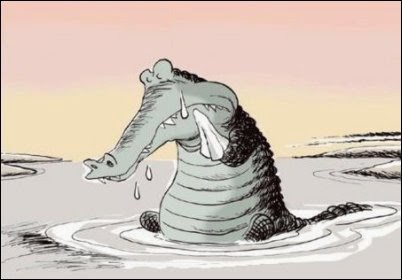
Below Larkin rightfully takes the Democrats, the black Pastors, U.S. Senator Sherrod Brown and State Senator & OH SoS candidate Nina Turner, Cuyahoga County Executive & Democrat candidate for Governor Ed FitzGerald to task for their crocodile tears regarding the changes to early voting in Ohio and the removal of Sunday voting

Larkin points out some of the facts that are getting washed out by the river of crocodile tears they are crying....

  • 32 states have early absentee voting with an average starting time of 22 days before the election.  LESS days than Ohio's 28 days of voting before the election.
  • 20 states require an excuse for absentee voting. A registered voter in Ohio can vote absentee with no excuse required.
  • Removing Sunday Voting: In five days of early voting in Cuyahoga County prior to the 2012 presidential election, fewer people voted on Sunday than any other day. Early voting turnout was 46 percent higher on Friday and 23 percent higher on Saturday than it was Sunday.
  • Of the 32 states that allow it, the length of the in-person early voting period varies by state from four days to 45. The average is 19 days. Ohio has 20 days of in-person voting.
  • Ohio Democrat Rep. Marci Kaptur and civil rights leaders Rep. John Lewis, are promoting a bill that would require all states only offer 15 days of early voting and would not mandate early voting the Sunday before the election.

Also adding to what Larkin points out above is the fact that a voting bill that removed the "Golden Week" and reduced early voting to 21 days passed the Democrat controlled OH House in 2009.

While it is to be expected that political party machine's and politicians will put a "spin" on issues.  And it is pretty much a given that politicians like those listed above will knowingly & willfully misrepresent the truth (lie) to fire up their base.  

But one has to ask about the black pastors!?!? 

At best, the black pastors participating in this misleading political charade of half-truths either refuse to educate themselves with the whole truth & facts, or at worse - they are willing participants in sowing discord by spreading lies & deception regarding early voting in Ohio.  

Either way these black pastors should be ashamed as they are doing a great disservice and owe more to their congregation.  Maybe a quick read of Proverbs 6:16-19 and a review of the Ninth Commandment (Thou shall not lie) is in order for these pastors. 

From The PD --

Democrats have lots of legitimate issues to raise in this year’s election for governor and other statewide offices.

Early voting isn’t one of them.

Noisemaking about voter suppression is, for the most part, utter nonsense.

Access to the ballot in Ohio is better than the national average and light years better than it is in the bluest states in nation. In fact, many Democratic states have laws governing voting so archaic one would think they were drafted by Fox News.

But Jim Crow-type voting laws in places like New York, Massachusetts and Connecticut never seem to get the attention of MSNBC and the Huffington Post. And when Ohio Secretary of State Jon Husted adopted the early voting recommendations of a 20-member panel of elections officials that consists of 10 Democratic loyalists, the Husted-bashing returned with a vengeance.

Cuyahoga County Executive Ed FitzGerald, the presumptive Democratic nominee for governor, advocated defying state law by having the county send out its own absentee ballot applications.

State Sen. Nina Turner, Husted’s Democratic challenger in this year’s election for secretary of state, declared herself “absolutely disgusted” with Husted’s early voting schedule.

And Sen. Sherrod Brown, Ohio’s leading Democrat, described (to MSNBC) the early voting edict as more evidence of Republican “mean spiritedness.”

The 2014 election in Ohio offers an ideal opportunity for meaningful debate on the policies of Gov. John Kasich and the Republican-run legislature.

Any partial list of those policies should include tax policy, job creation, educational attainment, deep cuts made to local governments in 2011 and laws aimed at women.

But angry rhetoric about early voting has a better chance of riling up the base than a thoughtful discussion of Ohio’s future.

For a moment, however, it’s worth tuning out the noise and considering, courtesy of the National Conference of State Legislatures and other sources, some of those stubborn little facts that get in the way of the voter suppression argument.

Thirty-two states have various forms of early absentee voting. The average starting time for early voting is 22 days before the election. Early absentee voting in Ohio this year starts 28 days before the election.

Twenty states require an excuse for absentee voting, including the three Democratic states I listed earlier and the all-important swing states of Michigan, Pennsylvania and Virginia. In Ohio, a registered voter can cast a ballot from the comfort of home, any time, day or night, nearly a month before the election — no excuse required.

Democrats, black ministers and other critics focus particularly on the lack of Sunday voting in Husted’s schedule (there will be Sunday voting in the 2016 presidential election).

But in five days of early voting in Cuyahoga County prior to the 2012 presidential election, fewer people voted on Sunday than any other day. Early voting turnout was 46 percent higher on Friday and 23 percent higher on Saturday than it was Sunday.

Of the 32 states that allow it, the length of the in-person early voting period varies by state from four days to 45. The average is 19 days.

There will be 20 days of in-person early voting in Ohio this year.

For more than a year some of the most prominent and liberal members of the U.S. House, including Rep. Marci Kaptur and civil rights leaders such as Rep. John Lewis, have been promoting a bill that would require every state to offer early voting. The bill would require only 15 days of early voting and would not mandate early voting the Sunday before the election.

Again, there will, be 20 days of early voting in Ohio this year.

For the last half-century,the Akron Beacon Journal has been the state’s most consistently Democratic big-city newspaper.

In a Feb. 26 editorial headlined “Ample Time,” the Beacon Journal labeled Husted’s early voting edict “the product of Democrats and Republicans crafting a worthy compromise, putting aside the calculated outrage and hollow claims, finding a middle ground that works for all counties.”

FitzGerald and his colleagues face gale-force political headwinds in this campaign, not the least of which are a Democratic president with declining popularity and a gigantic Republican advantage in fundraising.

History doesn’t offer them much hope, either.

In the two decades beginning in 1970, Democrats won 81.5 percent of the elections for statewide executive offices. In the six statewide elections since 1990, they’ve won an abysmal 25.8 percent.

If Democrats think voter suppression claims can lead them to victory in 2014, that losing streak will get even longer.

Larkin was The Plain Dealer’s editorial director from 1991 until his retirement in 2009.


Wednesday, March 19, 2014

Cuyahoga County Executive candidates will debate


From Cleveland.com Northeast Ohio Media Group:

CLEVELAND, Ohio – It's official: all six Democratic candidates for Cuyahoga County Executive have committed to appearing at a debate organized by the City Club of Cleveland.
State Rep. Armond Budish, the race's frontrunner, was the final candidate to commit – he did so on Monday, City Club CEO Dan Moulthrop said. The event will take place at noon on April 7, and will be moderated by WVIZ/PBS IdeaStream’s Rick Jackson.

County Councilman Jack Schron, the presumptive Republican candidate for Cuyahoga County Executive, will get his own City Club event on April 2.
. . .
# # #

Saturday, March 15, 2014

Very bad news: USA ceding Internet authority to the UN


Art credit: anunews.com


The US is starting to relinquish its sovereignty. Politico reports:

The U.S. Commerce Department is relinquishing its hold over the group that manages the Internet’s architecture amid pressure to globalize its functions in the wake of reports about NSA surveillance.
The National Telecommunications & Information Administration, a Commerce Department agency, said Friday it is transitioning the function to the “global Internet community.” The decision marks a dramatic change. Since the Internet’s inception, the United States has played a leading role in the management of critical back-end Web work, including management of .com and other domain names. The Internet Corporation for Assigned Names and Numbers (ICANN) has performed those functions under U.S. Commerce contract since 2000.
. . .
Some U.S. officials have warned about the dangers of ceding ICANN’s authority to the International Telecommunication Union, a United Nations agency, fearing countries like Russia and China could use it to allow online censorship. Congress unanimously passed a resolution ahead of a 2012 ITU meeting, highlighting the U.S. commitment to keeping the Internet free from government control.
Daniel Castro, a senior analyst at the Information Technology and Innovation Foundation, disputed the connection between NSA revelations and Internet governance in an op-ed Friday, and he warned that ICANN would not be held accountable without U.S. control.
“If the Obama Administration gives away its oversight of the Internet,” he said, “it will be gone forever.”
Some criticism of the decision immediately started popping up on Twitter.
“Every American should worry about Obama giving up control of the internet to an undefined group,” former House Speaker Newt Gingrich tweeted shortly after the announcement. “This is very, very dangerous.”
Read the rest here

Update: Health Care Compact


Art credit: granitegrok.com

An update from Jamie Story Kohlmann, Managing Director, Health Care Compact
. . . the Health Care Compact has gained two more co-sponsors in Congressmen Markwayne Mullin of Oklahoma and Tom Graves of Georgia. That's two more members of Congress who agree that states should have the option to manage health care themselves and the freedom to opt out of Obamacare and other failed federal programs.
The latest two signers join our lead sponsor, James Lankford (OK), and existing co-sponsors Rob Bishop (UT), Jeff Duncan (SC), and Lynn Westmoreland (GA), all of whom come from states that have already joined the Compact. These six House members are effectively representing their constituents and state legislatures, which have clearly declared that they want freedom from Obamacare.
We have news from the states too. The Health Care Compact is awaiting a House vote in Ohio, and we're hopeful the bill will soon be filed in North Carolina.
But for now, the main story is in Kansas, where the Compact is on the House Floor awaiting debate and approval. Once through the House it will go to the Senate, which has a freedom-loving majority that will likely pass it quickly. If you or any of your friends live in Kansas, please have them reach out to their state legislators to urge passage of the Health Care Compact next week. 
Finally - if you haven't seen it yet, please check out this National Review Online story from Karen Lugo at the Texas Public Policy Foundation. It's one of the best articles I've seen about the Health Care Compact. Once you've read it, please share with your friends and encourage them to learn more at www.healthcarecompact.org
Remember - the Health Care Compact does not prescribe a solution, but lets each member state design health care solutions that best fit its unique citizens. Just like we don't appreciate the federal government telling states what to do, the Compact doesn't tell member states what to do either. The Compact merely gives states the opportunity to choose health care solutions that are designed closer to home - not in Washington, D.C.

# # #

Friday, March 14, 2014

Follow ObamaCare Delays at Your Peril


Photo credit: wisegeek.com


Anthony Ciani has some good advice at AmericanThinker:

Despite being “the law of the land”, President Obama is telling a lot of people to ignore ObamaCare; but does that absolve you from following it?  The Affordable Care Act (ACA), also known as ObamaCare, is now in full effect, or it is supposed to be.  To avert certain political disaster for the Democratic Party, Obama has issued, as of March 5, 2014, 20 unilateral executive actions to “delay” ObamaCare mandates and taxes.
The President has the authority to pardon, but he cannot pre-pardon your crimes, just as a priest cannot pre-absolve your uncommitted sins; and just as a priest cannot change the list of sins, Obama cannot change the taxes you owe or the benefits you must provide.  So what could happen if you follow Obama’s “delays” and “waivers” in lieu of the law?
. . .  One of Obama’s unilateral changes was to allow people to keep their existing, non-qualifying insurance plans, but those who do will still owe the taxes, regardless of what Obama says or leads you to believe.
So what might happen if you keep your insurance and forgo your 2014 ObamaCare tax?  Regardless of reason, whether you believed Obama or were civilly disobedient, you failed to pay your taxes; however, the ObamaCare tax is special.  The IRS can neither criminally prosecute you nor seize your property for refusing to pay the mandate tax, but it can place liens on your property and assess penalties, and the IRS can criminally prosecute you and seize your property for failing to pay the penalties for evading the ObamaCare mandate.

These are potentially serious consequences, so if your 2014 tax preparation software omits the ObamaCare tax, complain to the manufacturer.  Find software or a preparer that includes the tax, or prepare the forms yourself.  If the official IRS forms omit the ObamaCare tax, complain to or sue the IRS, and then figure it out on your own.  Whatever you do, determine if you comply, and pay if you do not.
. . . Only the law is meaningful to the courts; they care nothing about unlawful executive decrees.[emphasis added]


Read more here